

Marmorkuchen (German Marble Cake)

My authentic Marmorkuchen recipe makes a classic German marble cake with a soft, buttery crumb and rich chocolate swirls. It's super simple to make, reliable and ideal for anytime you need a truly delicious cake. Perfect for Kaffee und Kuchen!
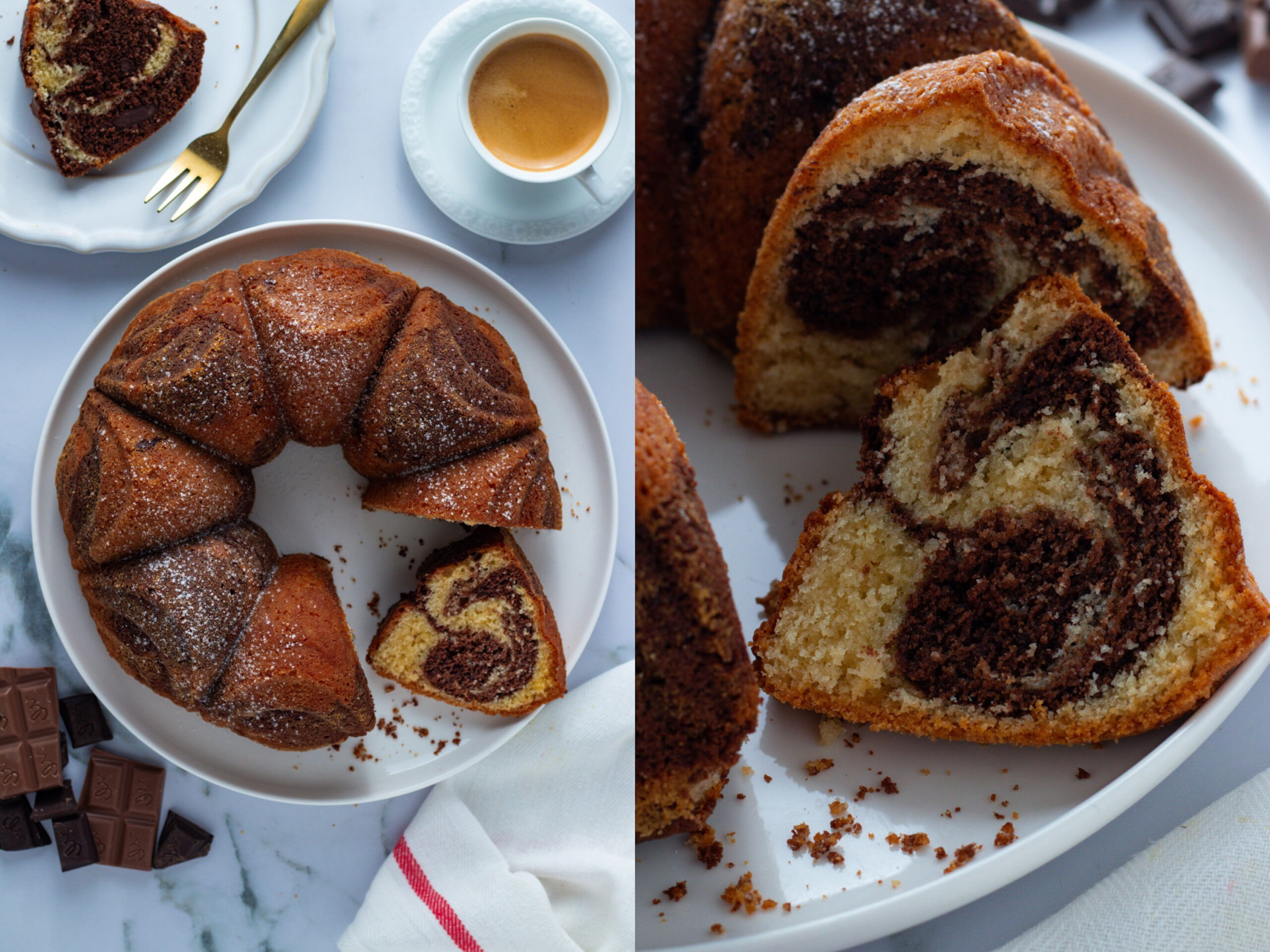
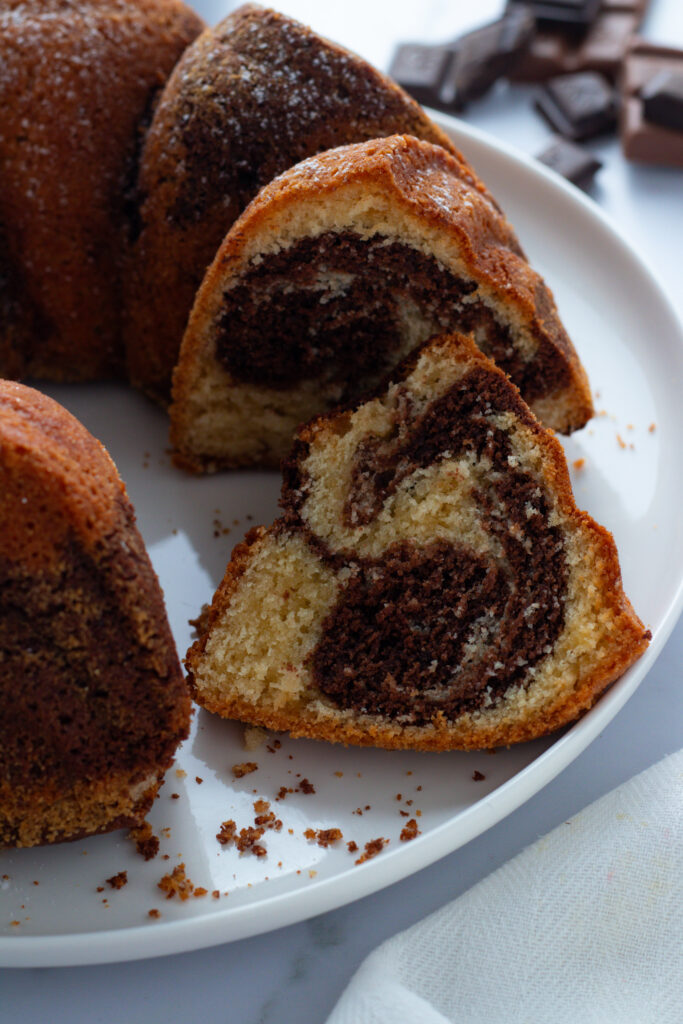
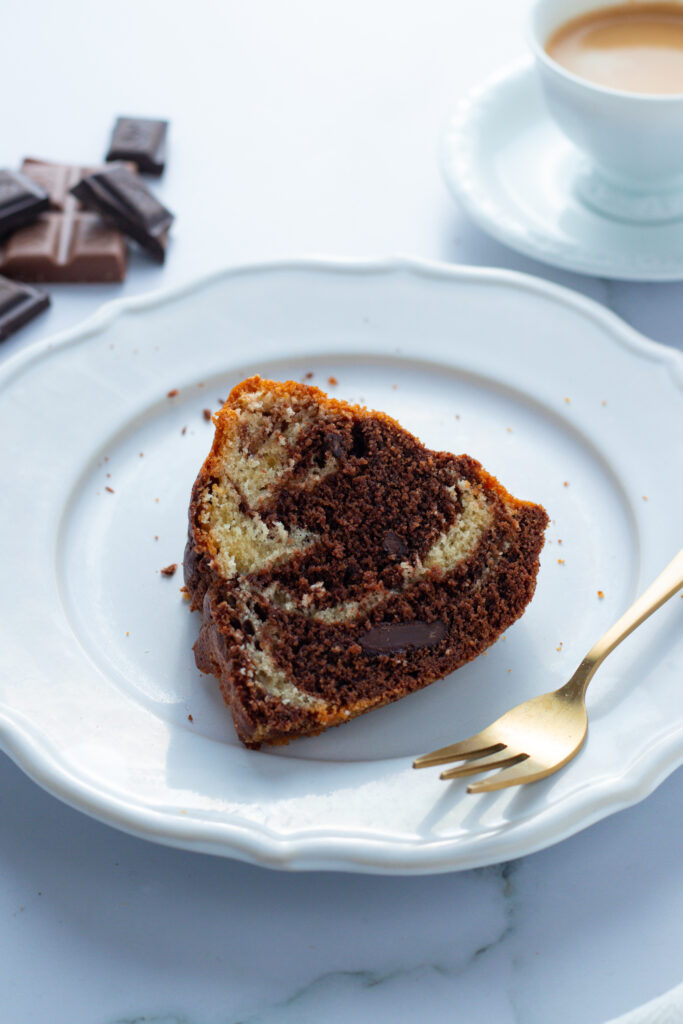
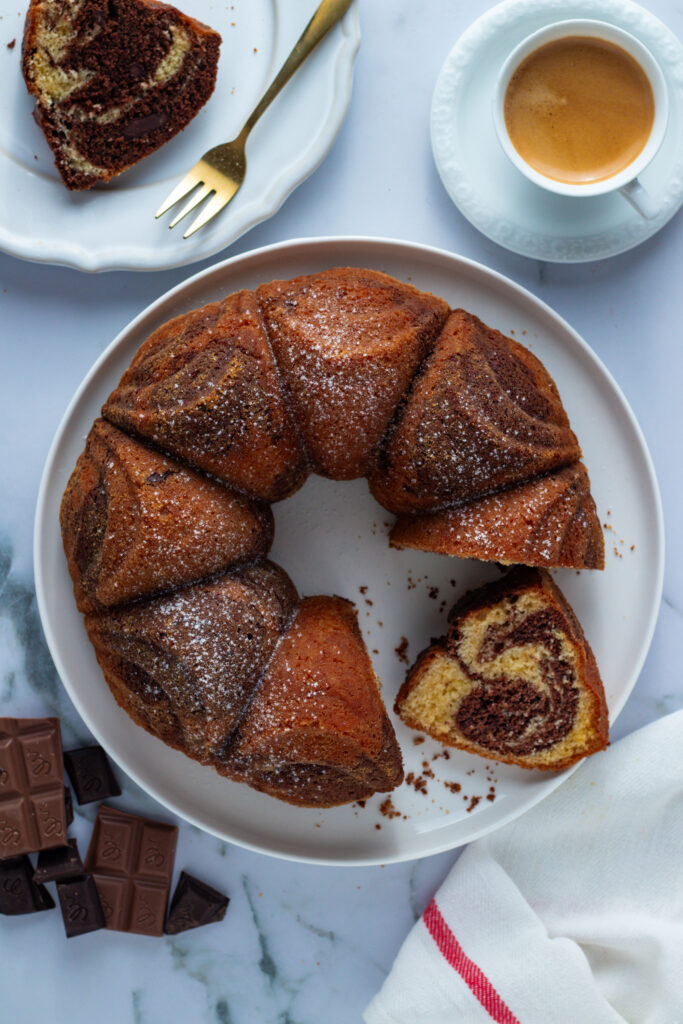
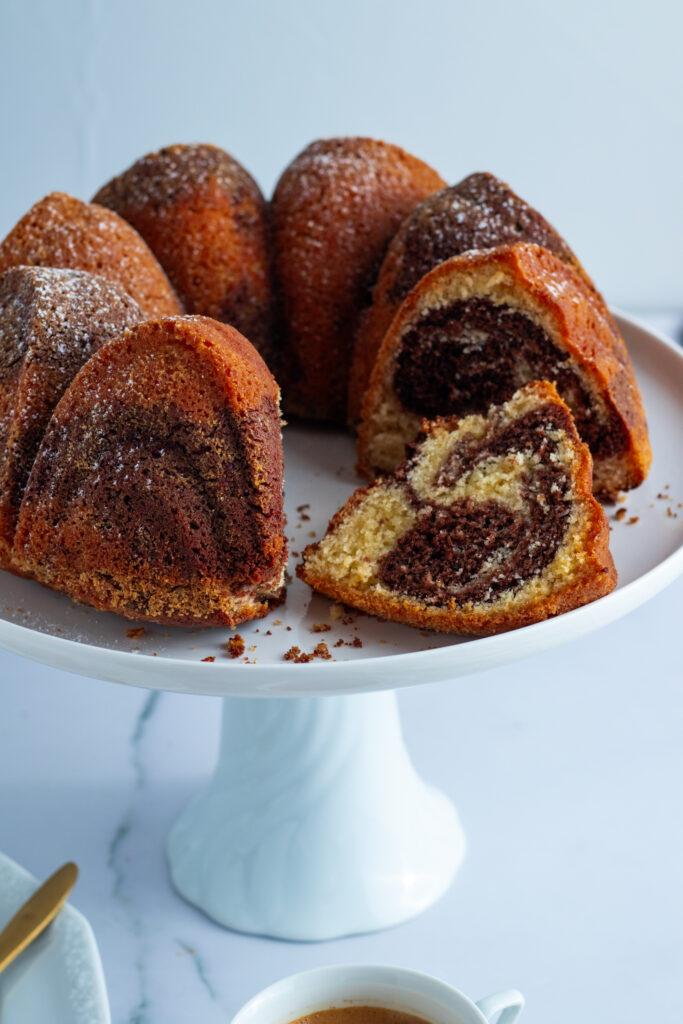
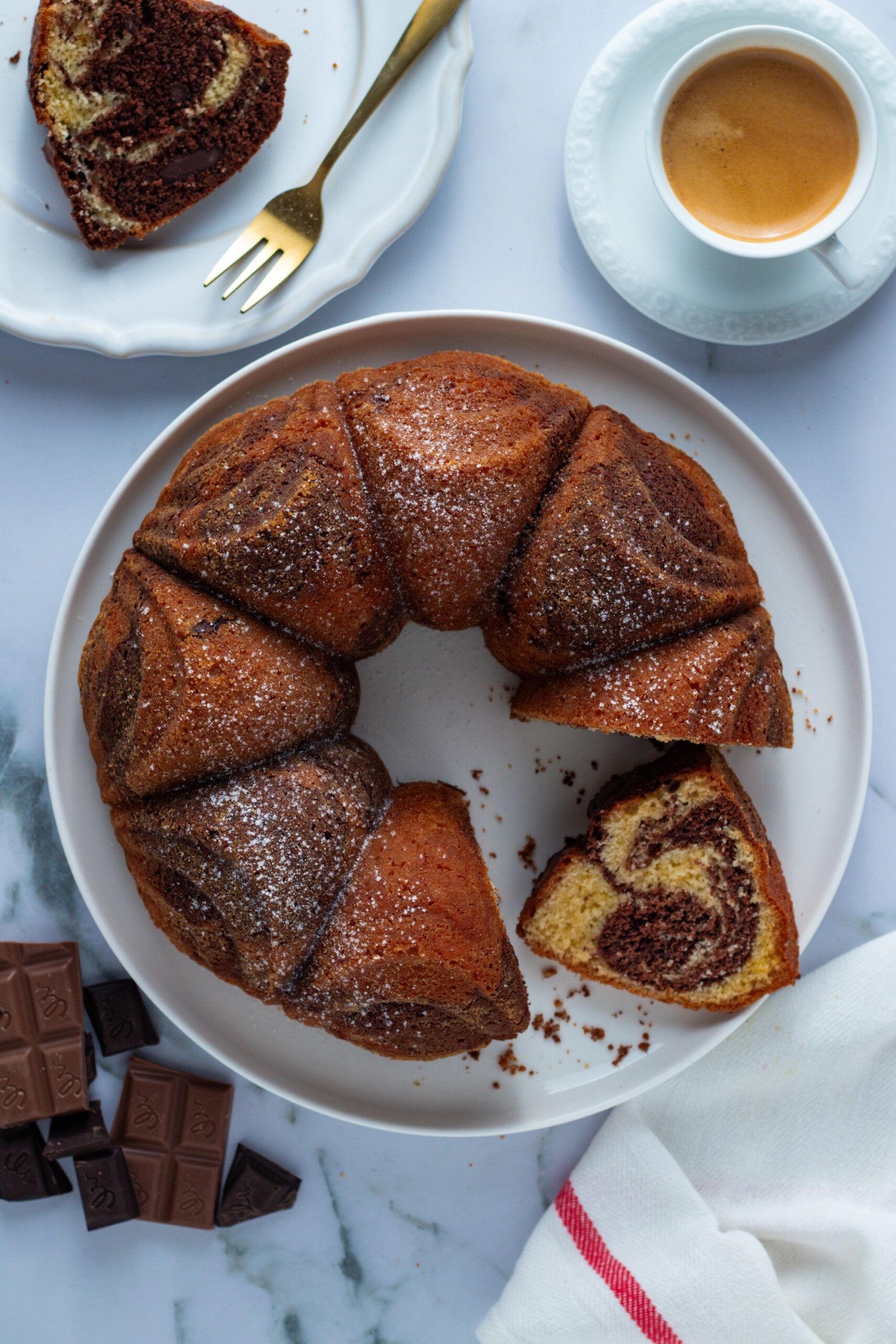
Marmorkuchen, or German Marble Cake, is one of my all time favourite breakfast cakes (Yes, there is such a thing!). A soft, buttery vanilla cake swirled with rich chocolate batter, baked until golden and glorious. What's not to like? This is exactly the kind of cake we love for Kaffee und Kuchen here in Germany (with lots of whipped cream).
I've made a lot of Marmorkuchen in my time, and in my recipe I like to use real dark chocolate, melted and chopped, rather than cocoa powder. It gives the chocolate swirl real depth and stops the cake from tasting dry or one dimensional. So good!
TABLE OF CONTENTS
▼
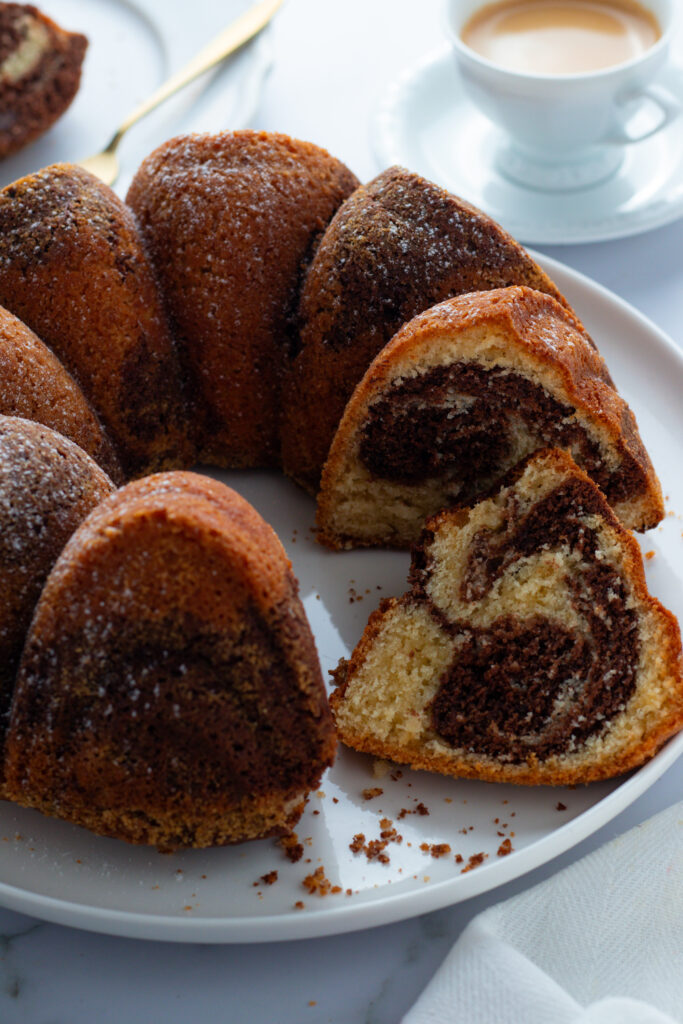
Why this Marmorkuchen recipe works
Marble cake lives or dies by its texture. Too dry, and you'll need a lot of cream to enjoy it... not necessarily a bad thing! (though can be rescued, see troubleshooting). Too dense, and it feels heavy. My version stays soft and moist for days thanks to three small but important details:
- Not overbaking! Start checking the cake at 45 minutes - as soon as a skewer comes out with some damp crumbs attached, it's done!
- Cream in the batter, which keeps the crumb tender and rich
- Real chocolate, not just cocoa, for flavour and depth.
This is the kind of cake that is just as good the next day, or even the day after.... if it lasts that long!
Ingredients
Marmorkuchen is a traditional, classic cake, and has lovely simple ingredients! Make sure your butter and eggs are really at room temperature so they mix properly into the cake batter.
- Butter, sugar, eggs and cream: This is a classic pound cake, with roughly even weights of butter, sugar and eggs. I always use unsalted butter in baking and add my own salt to taste. Use large eggs and heavy cream.
- Flour and baking powder: Plain or all-purpose flour is ideal here. Marmorkuchen should be soft but sturdy, not airy like a sponge cake. Check the expiry date on your baking powder, it goes stale faster than you think!
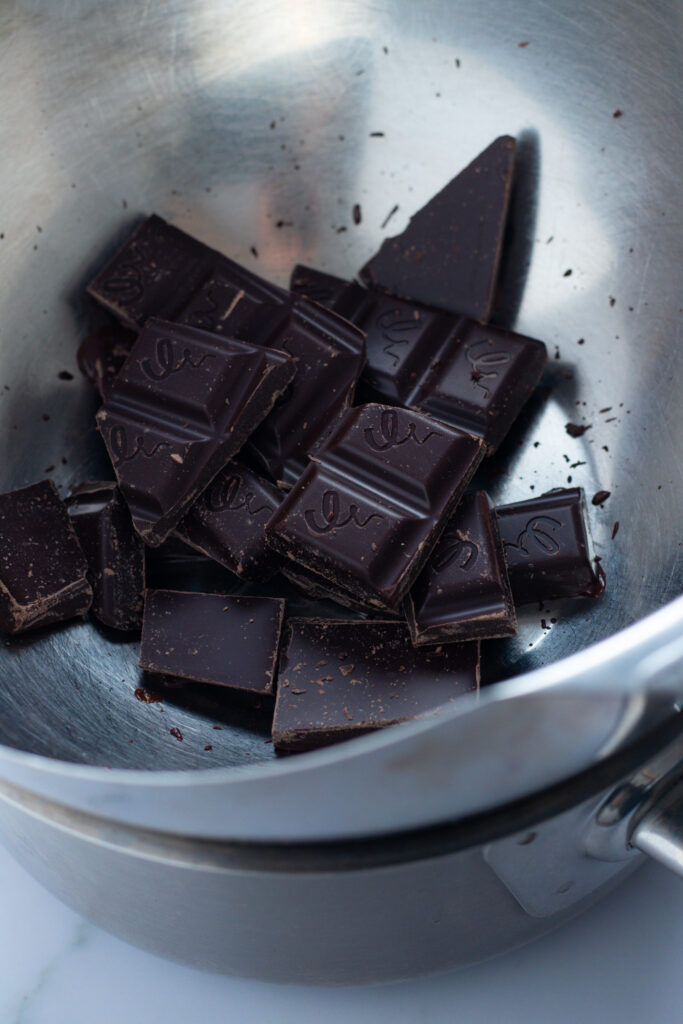
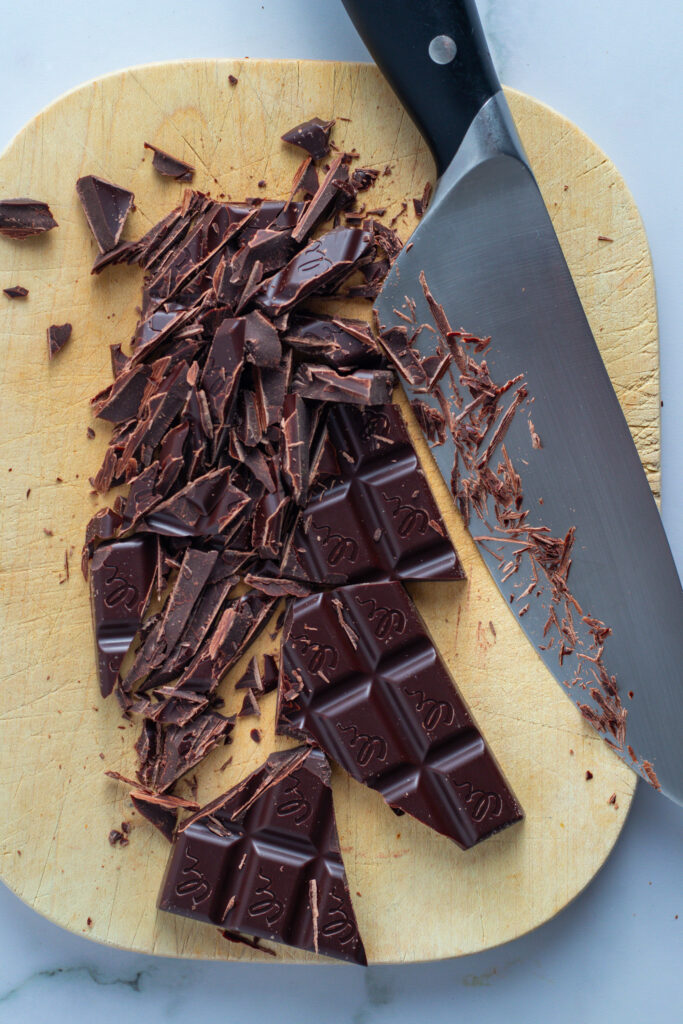
- Dark chocolate: For this cake, I use good-quality dark chocolate with around 60-70 percent cocoa solids. Melted chocolate gives the marbled batter a deeper, richer flavour and leaving some of the chocolate in chunks adds some gorgeous texture to the cake.
- Vanilla: Vanilla sugar is traditional in Germany, but vanilla extract works perfectly well if that's what you have.
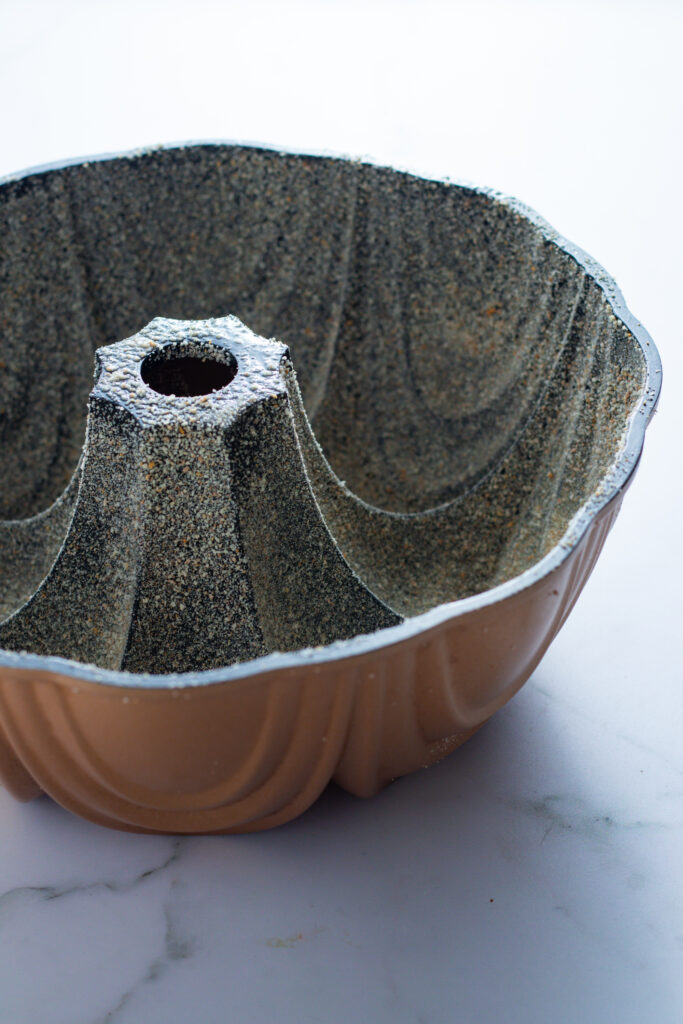
- Fine breadcrumbs (Semmelbrösel): Instead of flouring the tin, I coat it with very fine breadcrumbs. This is a traditional German baking trick and it makes a big difference. The crumbs help the cake release cleanly without leaving a chalky residue on the outside. I also use shortening or baking release spray rather than butter for a cleaner release.
Instructions
I love Marmorkuchen, as it's not only delicious, it's super quick to prepare. Make sure you properly cream the butter and sugar, it is the secret to a lovely tender crumb.
- First, grease the cake tin thoroughly, coat it with fine breadcrumbs, and preheat the oven.
- Next, cream the butter, sugar and vanilla until pale and fluffy, then add the eggs and cream.
- Then, divide the batter in half and mix melted dark chocolate into one portion. The goal is a smooth, rich chocolate batter that contrasts clearly with the vanilla.
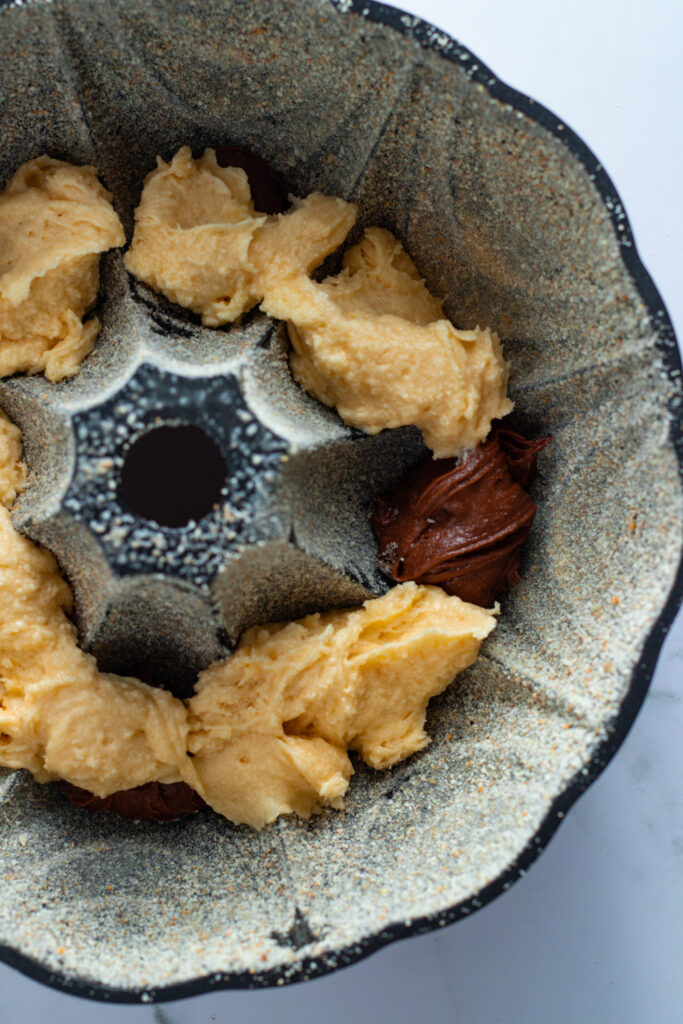
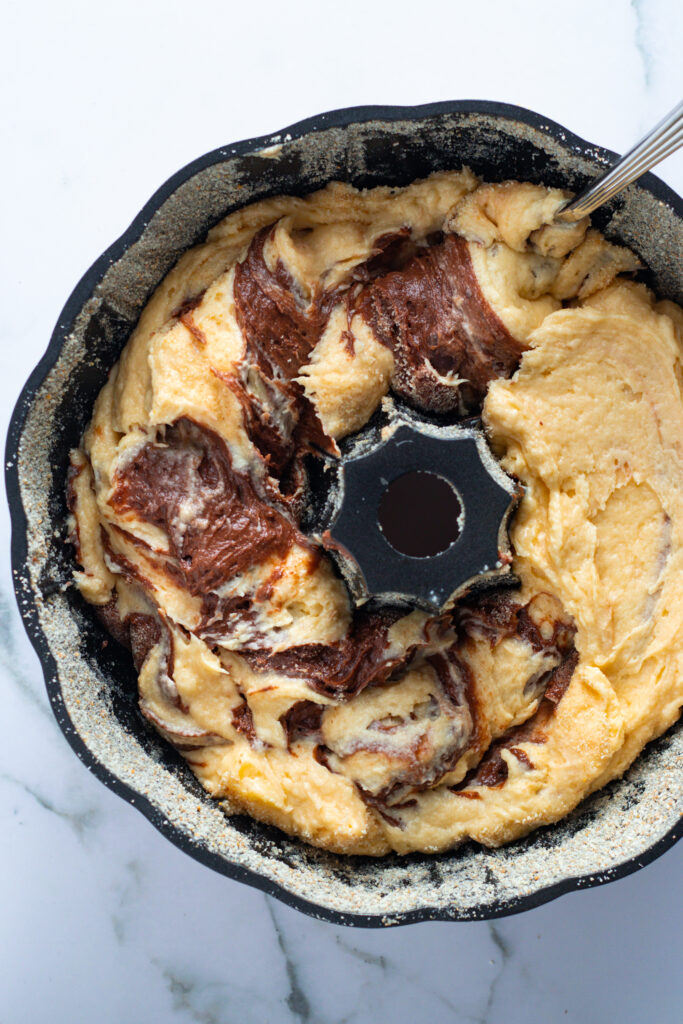
- Layer the plain and chocolate batters in the tin, then gently swirl with a fork. Stop while it still looks slightly messy to keep the marbling distinct.
- Bake until golden and set, then allow the cake to rest briefly before turning out and cooling completely.
The complete ingredient list and detailed instructions are in the recipe card at the bottom of the page.
Choosing the right Cake Pan
Traditional Marmorkuchen is baked in a Gugelhupf or Bundt, but this recipe is quite flexible.
You can use:
- A 2.5 litre / 2.5 qt or 10 cup Gugelhupf or bundt tin. Not sure how big your tin is? Fill it with water and see!
- A ring tin
- Two medium loaf tins
If using loaf tins, start checking for doneness a little earlier, as they often bake faster than deeper moulds.

Jay's Cooking Tip
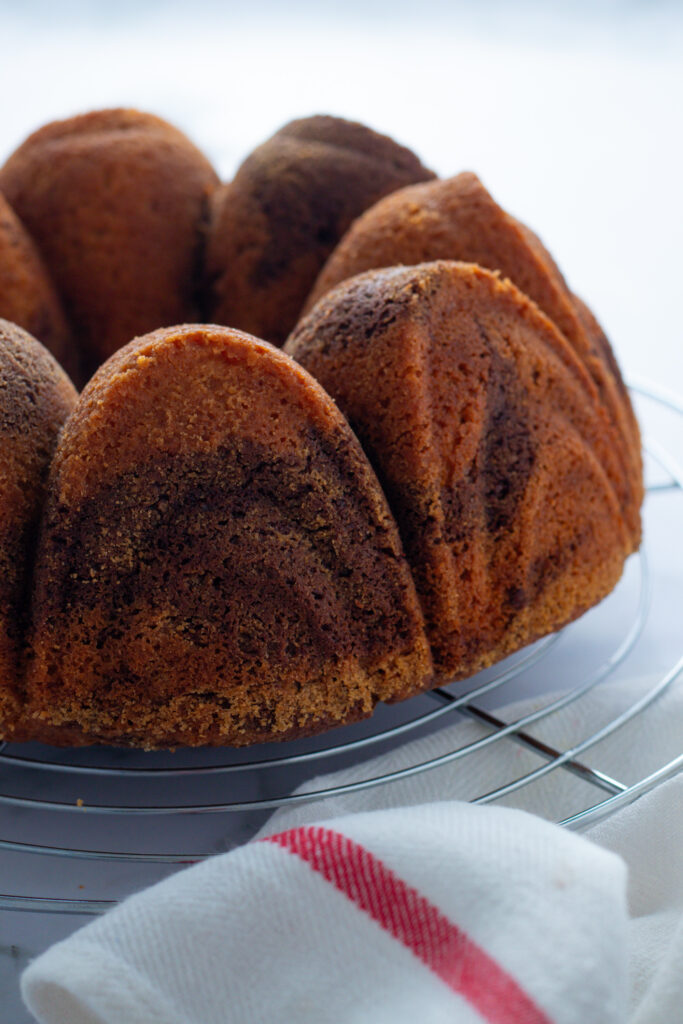
The best way to get Marmorkuchen to release cleanly is to grease the tin well, then coat it with very fine breadcrumbs, known in Germany as Semmelbrösel, instead of flour. The breadcrumbs create a delicate barrier that prevents sticking without leaving a chalky residue on the cake. This is how many German home bakers prepare their tins, especially for Gugelhupf cakes!
How to Serve Marmorkuchen
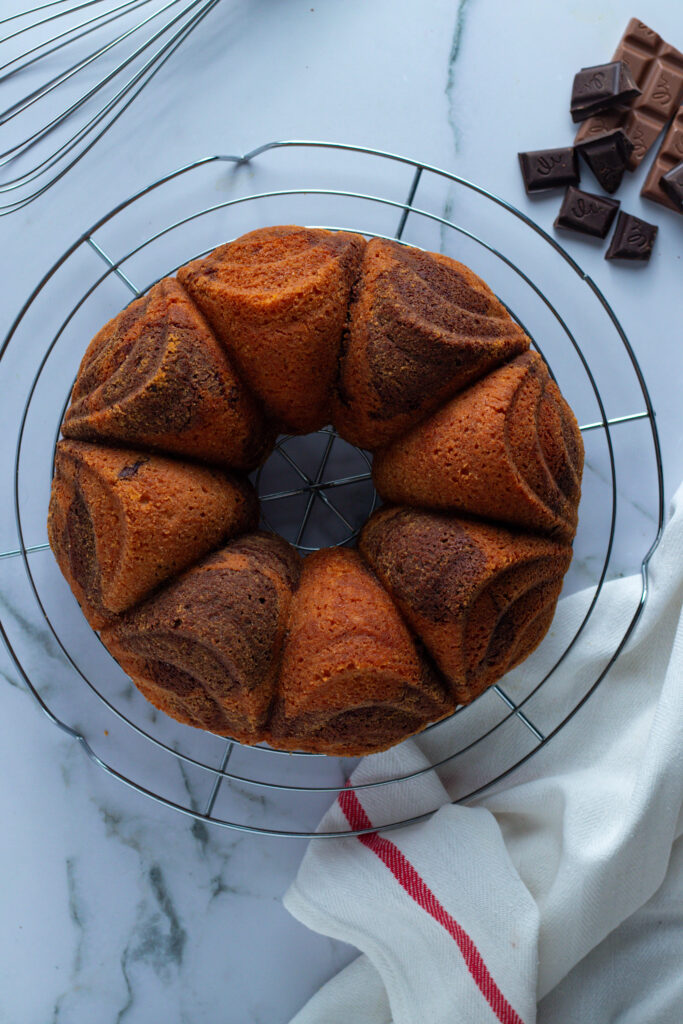
Marmorkuchen really needs very little, as it is perfect on its own! I'd recommend only:
- A light dusting of icing sugar
- Whipped cream on the side (essential at the German table)
- Strong coffee or espresso
Troubleshooting
The cake is dry: This is usually caused by over baking. Check a little earlier next time, but all is not lost! Dry cakes love to be brushed with a simple sugar syrup, and it can absolutely save a dry cake.
To make simple syrup combine ½ cup of sugar and ½ cup of water in a saucepan, stirring over medium heat until dissolved. Brush all over the cake several times, allowing the liquid to sink into the cake.
Chocolate sinks: The chocolate batter may be too thin. Make sure the melted chocolate has cooled slightly before mixing.
No visible marbling: You've been a bit too enthusiastic and over swirled the batter. Just go once around the pan and stop sooner next time!
Frequently Asked Questions
Can I make Marmorkuchen ahead of time?
Yes, Marmorkuchen is an excellent make-ahead cake. In fact, the flavour and texture often improve after resting for a day. Bake the cake, let it cool completely, then wrap it well and store at room temperature.
Can I bake Marmorkuchen without a Gugelhupf or bundt tin?
Definitely. While a Gugelhupf tin is traditional, Marmorkuchen adapts very well to other tins. A ring tin works beautifully, and two standard loaf tins are a great alternative if that's what you have. Just start checking for doneness a little earlier, as shallower tins tend to bake faster.
Can I freeze MArmorkuchen?
Yes! Dryer cakes like this are perfect for freezing. I like to slice it up first and wrap it really well to prevent freezer burn.
Marmorkuchen (German Marble Cake)
My authentic Marmorkuchen recipe makes a classic German marble cake with a soft, buttery crumb and rich chocolate swirls. It's super simple to make, reliable and ideal for anytime you need a truly delicious cake. Perfect for Kaffee und Kuchen!
Ingredients
- 250 g caster sugar
- 250 g unsalted butter, softened
- 2 teaspoon vanilla essence or 1 tablespoon vanilla sugar
- 5 large eggs, room temperature
- 150 ml heavy cream
- ¼-½ teaspoon of salt
- 200 g dark chocolate, (70% cocoa)
- 300 g plain or all-purpose flour
- 2 teaspoon baking powder
- Fine breadcrumbs, Semmelbrösel, for coating the tin
Instructions
- PREPARE: Heat the oven to 180°C / 375°F / Gas 5. Grease a 2.5 litre Bundt Pan/Gugelhupf or ring tin thoroughly (see notes), then coat with fine breadcrumbs, tapping out any excess.Fine breadcrumbs
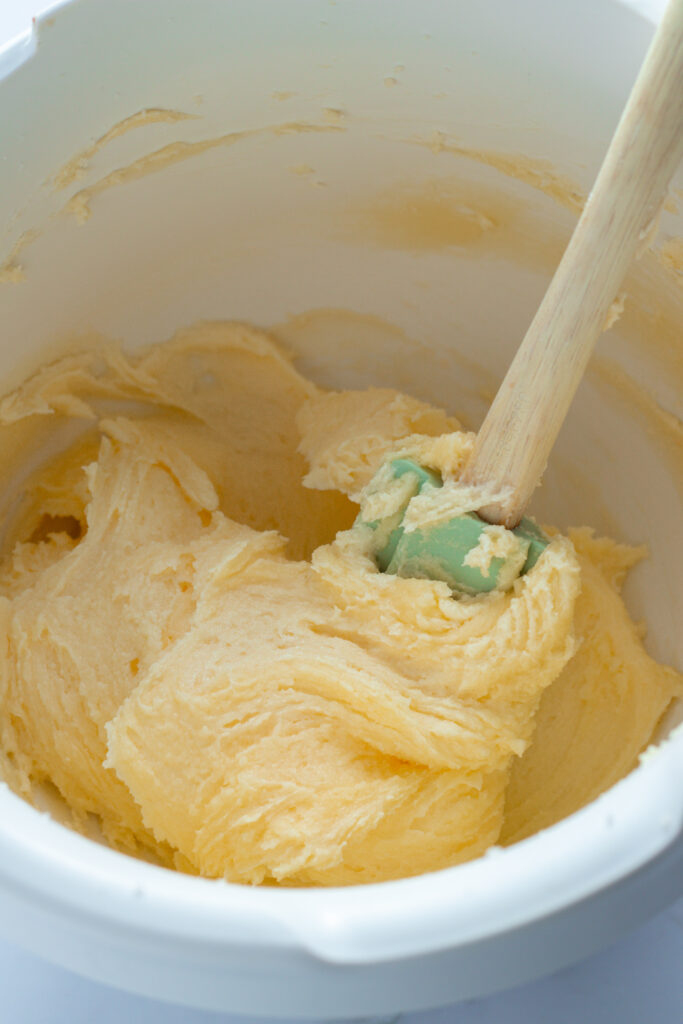
- CREAM BUTTER AND SUGAR: In the bowl of a stand mixer, cream the sugar, butter and vanilla together until pale and fluffy. This should take at least 5 minutes. Remember to scrape the sides of the bowl down with a silicone spatula every minute or two so that everything is well combined.250 g caster sugar, 250 g unsalted butter, 2 teaspoon vanilla essence or 1 tablespoon vanilla sugar
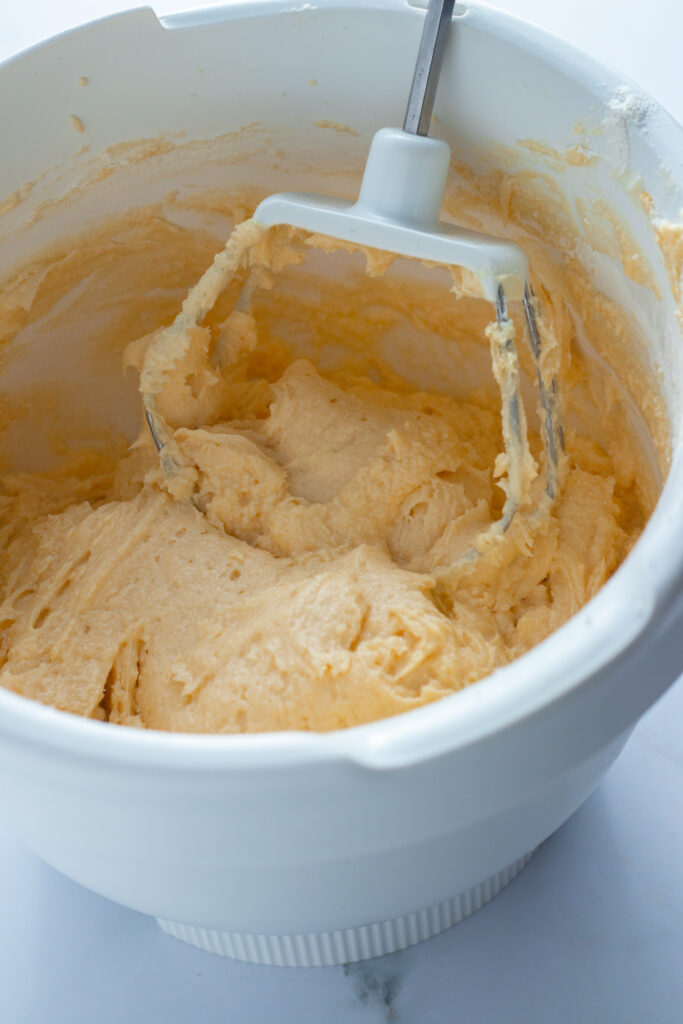
- BEAT LIQUIDS: Add the eggs, one by one, mixing well between each addition. Add the cream and salt, mixing until completely combined.5 large eggs, 150 ml heavy cream, ¼-½ teaspoon of salt
- MELT CHOCOLATE: Meanwhile, melt half of the chocolate in a heatproof bowl set over a pan of simmering water, and cut the rest into small chunks.200 g dark chocolate
- ADD DRY INGREDIENTS: Whisk the flour and baking powder together, add to the cake batter and mix until well combined.300 g plain or all-purpose flour, 2 teaspoon baking powder
- LAYER CAKE: Divide the batter in half and mix one half well with the melted chocolate and chocolate chunks. Pour one third of the plain batter into the tin, followed by all of the chocolate mixture, and then the rest of the plain batter. Using a fork, carefully swirl the two together using spiralling movements to get a good marbled appearance.
- BAKE: Smooth over the top using a spatula and bake in the preheated oven for 45-55 minutes, checking after 45 minutes with a skewer to see if it has cooked through.
- COOL AND SERVE: Allow the cake to rest in the tin for 5 minutes before carefully turning out onto a wire rack and allowing to cool. When cool, sprinkle with icing sugar and serve with whipped cream and coffee.
Notes
When baking, I use and recommend a digital scale like the one below. It takes all the guess work out of measuring and ensures success every time. US / Imperial measurements are approximate.
Recommended Equipment

As an Amazon Associate and member of other affiliate programs, I earn from qualifying purchases.
Nutrition
Serving: 1slice | Calories: 490kcal | Carbohydrates: 48g | Protein: 7g | Fat: 31g | Saturated Fat: 18g | Polyunsaturated Fat: 1g | Monounsaturated Fat: 8g | Trans Fat: 1g | Cholesterol: 128mg | Sodium: 157mg | Potassium: 189mg | Fiber: 2g | Sugar: 25g | Vitamin A: 811IU | Vitamin C: 0.1mg | Calcium: 79mg | Iron: 4mg
Tried this recipe?I'd love to hear how it went! Please leave a review or a star rating and let me know how it was! Use the hashtag #daysofjay on Instagram so I can see your delicious creations.


About the Author
Jay Wadams is a cookbook author, food photographer, and graduate of Le Cordon Bleu in Gastronomy and Nutrition.
Based in Italy 🇮🇹 Germany 🇩🇪 and Australia 🇦🇺.